
Wednesday, October 3, 2012

Lawn Weeds

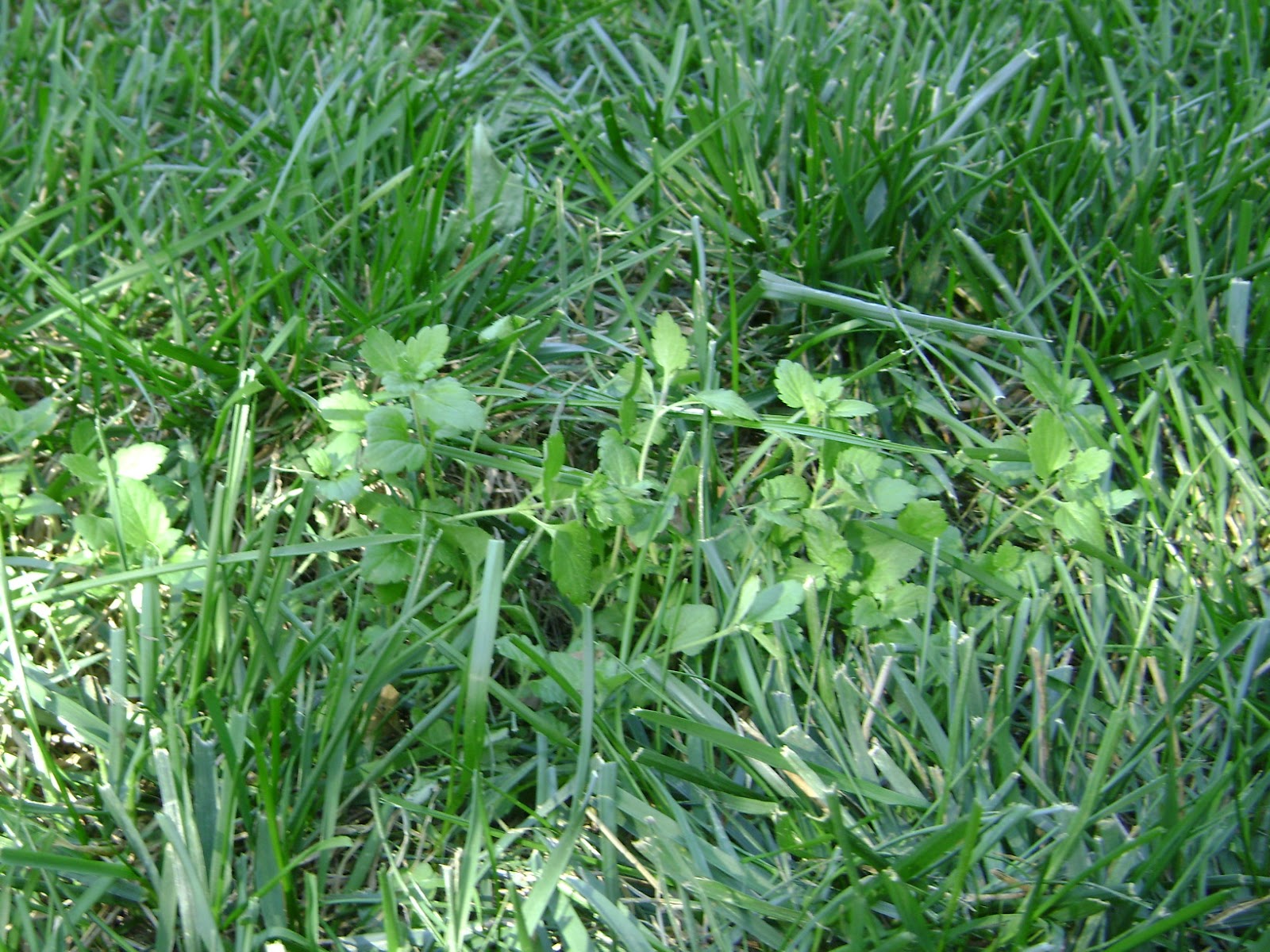
Now is the best time to manage broadleaf weeds. Dandelions, henbit (picture), chickweed, speedwell, and other weeds are easiest removed when small. A thick, healthy lawn will crowd out most weeds. Broadleaf weed herbicides can be applied anytime the weed is actively growing. Read and follow your products label for best and safest use.

Wednesday, September 19, 2012

Ornamental Grasses

Even with the heat and drought of this year, my ornamental grasses did well. I did water them some this summer. Ornamental grasses are tough plants. Usually, nothing bothers them. I did witness an issue this year with my Praire Dropseed, Sporobolus heterolepis (picture). They were being mauled. The new kittens born this spring were having a grand time wrestling with them. You can see a healthy one at the planting at the Riley County Office Building, 110 Courthouse Plaza. Join me on Saturday, September 29 at 10 A.M. for discussion on our planting. Meet me at the grass bed.

Monday, September 17, 2012

It's not suppose to bloom now!
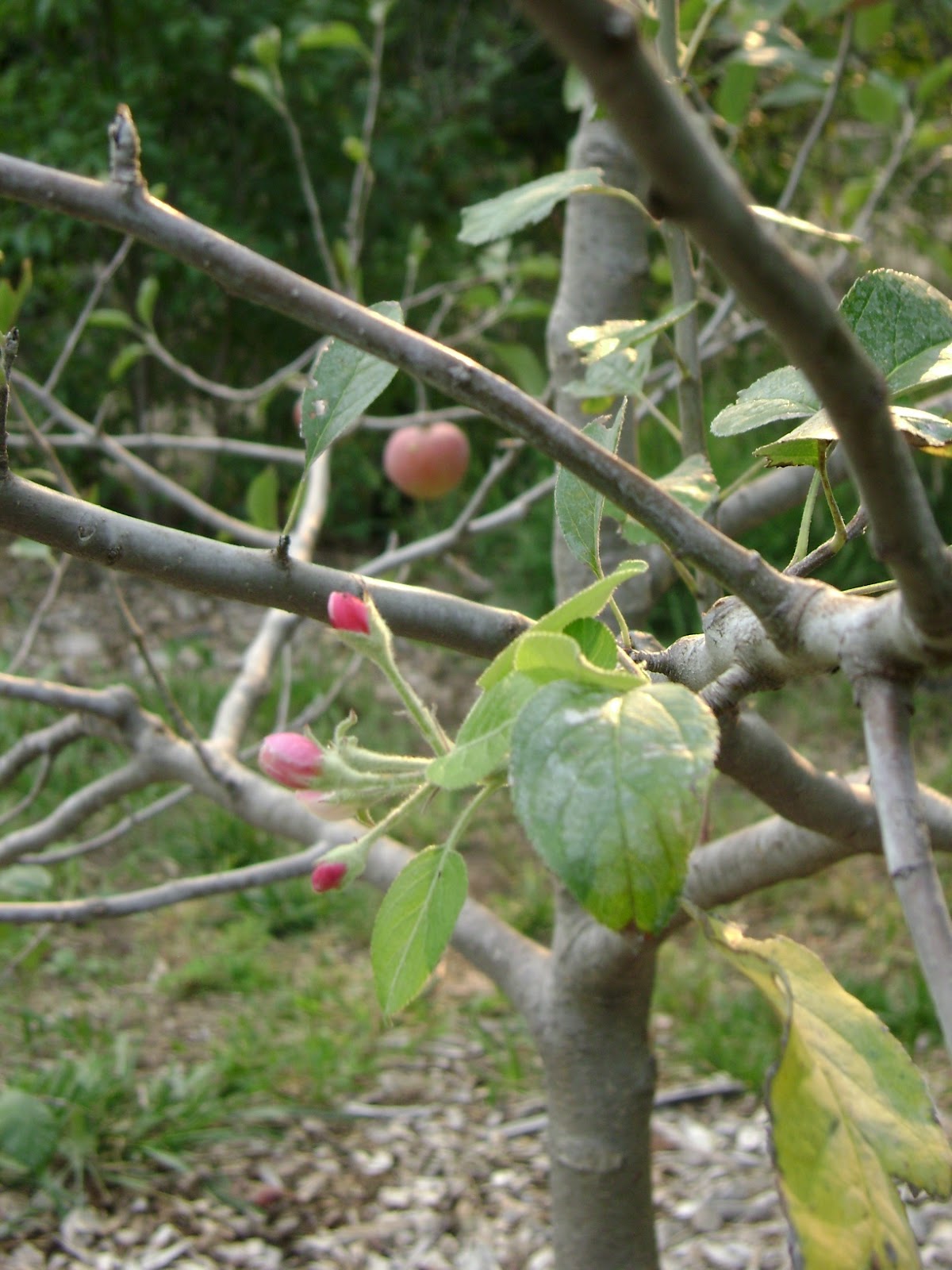
My 'Enterprise' fruiting apple is blooming again. I haven't even harvested my fall crop. The summer stress has some spring blooming plants flowering now. I've seen several flowering crabapples and lilacs blooming. Unfortunately, that will take away from our production and flowering next spring. There is nothing to been done, so might as well enjoy the extra color this fall.

Tuesday, August 21, 2012

Ornamental Grasses

The new ornamental grass bed at the Riley County Office Building has done well this year. These were planted this spring. They have been watered along with the turf. Stop-by and see them as many are now blooming. Each variety has a label to identify them. Next spring would be a good time to plant your favorite grasses. Here is the link to the publication that describes these grasses. http://www.ksre.ksu.edu/library/hort2/mf3048.pdf

Tuesday, August 14, 2012

Fall Lawn Decisions

This is what my front lawn looks like going into mid-August. It wasn't watered at all this summer. Last fall and spring were a struggle for it with little moisture and warmer than average temperatures. Besides proper mowing, I plan to fertilize it with Urea once the heat breaks and some natural rain occurs. September is the best time to fertilize tall fescue lawns. Learn about seeding and fertilizing at the "Back to Gardening" event at Pottorf Hall on August 30 beginning at 6 pm.

Thursday, August 9, 2012

Its Cracking

This soil crack is 2 inches wide. It is the biggest one I found in my yard. We missed another rain chance last night. Hopefully, we will get rain and cooler temperatures so that we can decide what to do this fall with the lawn. August 30, at 6 pm is a program on fall lawn care at Pottorf Hall in preparation for Lawn Labor Day weekend.

Friday, July 20, 2012

Fair Exhibits

These onions are going to the Riley County Fair. The roots and tops need to be removed. The outer leaves will remain and be dusted off. Our 4-H and Open class entries need 3 per exhibit for onions. Go to the http://www.rileycountyfair.com/ to see the fair book with information on classes. Entries need to be brought to Pottorf Hall in CiCo park on Thursday, July 26 from 8 am to noon. Another important reference for exhibiting vegetables is at http://www.ksre.ksu.edu/library/hort2/c405.pdf . This publication gives information on how to prepare the individual crops. 

Monday, July 16, 2012

Rose Blooms

I'm surprise that my hybrid tea roses are still blooming. This vase has my 3 favorite red roses, Mister Lincoln, Olympiad and Papa Meilland. They are all very fragrant. Another worthy red rose is Veterans' Honor. Hopefully, there will be some available for the Riley County fair.
I like to cut my flowers early Monday morning and they usually last on my desk until Friday. It is best to re-cut the stems and change the water daily. One advantage of the hot and dry weather is that I'm having very little blackspot causing the leaves to fall off. I've got a drip tube that I run once a week on these roses. To learn about blackspot, go to http://www.hfrr.ksu.edu/p.aspx?tabid=586#R .

Thursday, July 12, 2012

Scorch is Plant Stress

I have 5 choke berry bushes by the house and they all show plant stress. They have done this in previous years. It isn't best for any plant but usually not life threatening. Leaf scorch, as this is called, is when the plant is loosing (transpiring) more water than it is taking in. For more information on scorch, go to http://www.hfrr.ksu.edu/p.aspx?tabid=586#S

Monday, July 9, 2012

Onion Harvest

The onion crop was pulled this weekend. I'm surprised they did as well as they did. Cool weather is usually needed for good growth. The frequent, shallow watering and some nitrogen must have done the trick. These onions will "cure" on our covered porch until the necks dry up. Keeping them in a dry and airy location until use is best. Or as I just got off the phone with a grower, chopping them up and putting them in the freezer is a sure way to store them.

Friday, July 6, 2012

Squash plant death

This zucchini squash bit the dust. I cut the stem open to look for squash vine borer. None discovered. There were not many roots when I pulled it up. Guessing it was a root issue. I would be surprised if it was over-watered which would cause root death. I'm not sure what went wrong.

Tuesday, July 3, 2012

Squash bugs

I'm having a bumper crop of squash bugs this year on my one pumpkin plant. It will be a busy fourth of July fighting for freedom for this pumpkin to survive!

Friday, June 29, 2012

Tobacco hornworm

Found this tobacco hornworm feeding on my Mt. Bell cherry tomato this morning. This tomato is in a container on the deck. Earlier, had the tomato hornworm found floating in rain water in the field planting tomatoes. I picked this guy off for my control measure.

Tuesday, June 26, 2012

Squash bug

The squash bugs have really been active laying eggs on my one pumpkin plant. I've been squashing the adults and scraping the eggs off, but can't keep up. Hatch of the young is any day now. An insecticide treatment will be applied according to the label to reduce their population. Squash bug information is at
http://www.ksre.ksu.edu/library/entml2/MF2508.pdf

Thursday, June 21, 2012

Herbicide on Tomato

This younger tomato plant absorbed some phenoxy herbicide showing up on a few leaves that are distorted. 2,4-D vapor drift is the usual agent. This amount will not cause much injury. In previous years, my whole plants were damaged to the point they never produced. Once it occurs, there isn't any cure. Prevention is the only solution.

Monday, June 18, 2012

Tomato Hornworm

This tomato hornworm was found next to my tomatoes in a film of water trapped on the black plastic mulch. I didn't find any missing leaves, but the size would indicate it had been feeding for sometime. The storm on Thursday must of dislodge it. Hand removal is easiest for a typical tomato planting. Many insecticides are available for treatment. To learn more about them, click on link. http://www.hfrr.ksu.edu/DesktopModules/ViewDocument.aspx?DocumentID=1729

Monday, June 11, 2012

Coneflower Problem

I started this PowWow coneflower from seed last year. The only one I got out of my ten seeds. It bloomed a little last fall. I was looking forward to a big splash of color this year. Instead, it got infected with a disease called aster yellows. That's how gardening goes sometimes. To learn about aster yellows go to http://www.hfrr.ksu.edu/DesktopModules/ViewDocument.aspx?DocumentID=1577 This plant is no more in the landscape.

Wednesday, June 6, 2012

Apricot Harvest

Harvest is wrapping up on the apricot. You want the fruit to be nicely colored with no green background. I treated it twice for Oriental fruit moth. About a third of the fruit had larvae to cut out of the fruit. I've never been a fan of canned apricots. Fresh is the only way to go for me.

Monday, June 4, 2012

Genista Caterpillar

I found this Genista Caterpillar on my Baptisia after reading the K-State Research and Extenison Entomology newsletter. To read more, go to
http://www.entomology.ksu.edu/doc5018.ashx

Friday, June 1, 2012

Ripe Black raspberry

Normally, I harvest my first black raspberry around father's day. I harvested my first one yesterday. I'm thankful that it has cooled off. It should make the berries sweeter. It is easy to tell when they are ripe. They easily separate from the plant.